
Soccer Formations and Strategies: Ultimate Guide to Winning More
If you’re ready to truly understand soccer formations and strategies, you’re in the right place.
Knowing how teams organize themselves on the field—and why—is one of the biggest keys to playing smarter and winning more.
Soccer formations are the way a team arranges its players—how many defenders, midfielders, and forwards take their positions.
Soccer strategies are the game plans teams use: how they attack, defend, control possession, and exploit weaknesses.
In this guide, I’ll break down the most common formations and strategies, showing you the strengths and weaknesses of each. I’ll help you understand which ones fit different game situations so you can make smarter decisions on the field.
It might sound complicated, but I promise to keep it simple and practical—because understanding these concepts will give you a real edge every time you play.

Soccer Formations and Strategies
You can scroll through the full guide or jump straight to the parts that matter most to you.
Make sure to watch the video tutorial—it’ll bring everything to life and help you apply the tactics faster.
And don’t miss the special free gift at the end—it’s designed to boost your soccer IQ and take your game to the next level.
- What are the different soccer formations?
- What are the best soccer formations for beginners?
- What is the best attacking soccer formation?
- What is the best defending soccer formation?
- Soccer formations and their advantages
- Strengths and weaknesses of each soccer formation
- How to take action, keep moving forward, and improve faster than most players!
Follow my tips and tricks to make it a breeze, even if you’re a beginner. Let’s go!

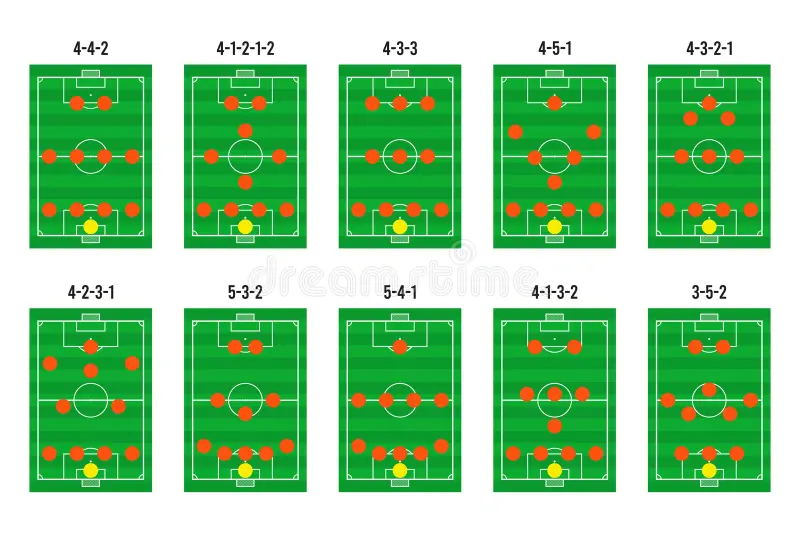
Different Soccer Formations Explained
When you understand soccer formations and strategies, you stop just playing the game—and start controlling it.
Each formation offers a unique advantage depending on your team’s strengths, the opponent’s style, and the game situation. Here are some of the most popular and effective formations used at every level of the game:
⚽ 4-4-2 – The Classic Balance
One of the most widely used formations in soccer history.
You’ve got 4 defenders, 4 midfielders, and 2 strikers.
What makes it powerful is its balance—solid defense, a strong midfield presence, and two forwards ready to capitalize on chances. This setup is perfect for teams that want to stay organized and strike when the opportunity comes.
⚽ 4-3-3 – Attack with Intent
Used by many top attacking teams around the world.
This shape lines up 4 defenders, 3 midfielders, and 3 forwards.
It’s designed to pressure the opponent, push the fullbacks forward, and create overloads in wide areas. Great for fast-paced, offensive-minded teams who want to keep defenders on their heels.
⚽ 3-5-2 – Dominate the Midfield
Looking to control possession? This is your go-to.
With 3 defenders, 5 midfielders, and 2 forwards, your team can flood the middle of the field, dictate tempo, and build attacks with patience and precision. Just make sure your wingbacks have lungs of steel!
⚽ 5-3-2 – Defend First, Strike Fast
Perfect for teams that like to stay compact and counter-attack.
You’ve got 5 defenders, 3 midfielders, and 2 strikers.
This formation is tough to break down and lethal on the break. It gives your team the chance to soak up pressure, stay tight at the back, and punish teams when they overcommit.
Which formation is best?
It depends on your players, your goals, and the game itself. But knowing the strengths and weaknesses of each setup gives you a huge edge.
Formations don’t win games—smart strategies and committed players do. Use your formation as a tool, not a crutch.
Soccer Formations For Beginners
If you’re just starting out, the last thing you want is a confusing setup that makes the game harder than it needs to be.
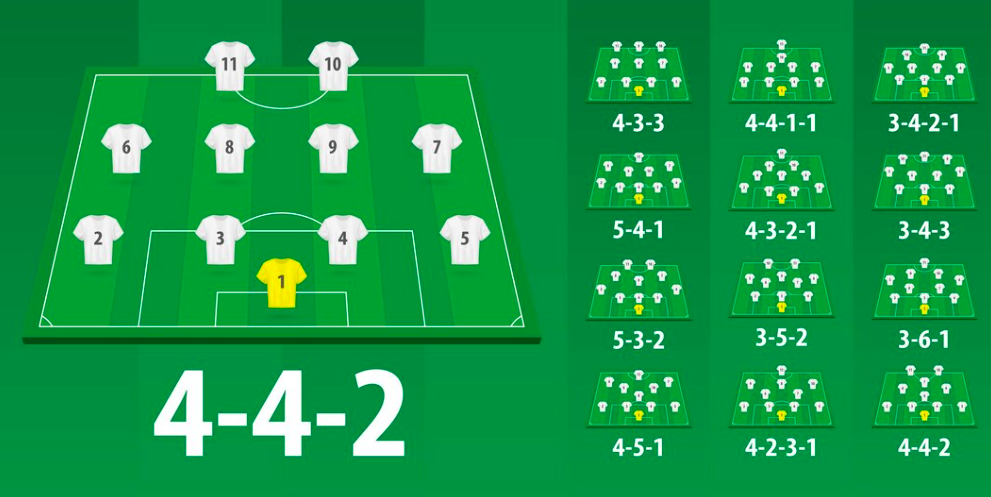
That’s why one of the best soccer formations for beginners is the classic 4-4-2.
It’s simple. It’s balanced. And it works.
With four defenders, four midfielders, and two forwards, this formation gives players clear roles, structure, and support across the field. It teaches the basics of both attacking and defending, which is exactly what you need at the beginning of your journey.
As you grow and gain more experience, you can start experimenting with other soccer formations and strategies. But to build confidence and get your positioning right early on, the 4-4-2 is an excellent place to start.
It’s not about looking fancy—it’s about building the fundamentals. And this formation does that better than any other for new players.
Attacking Soccer Formations
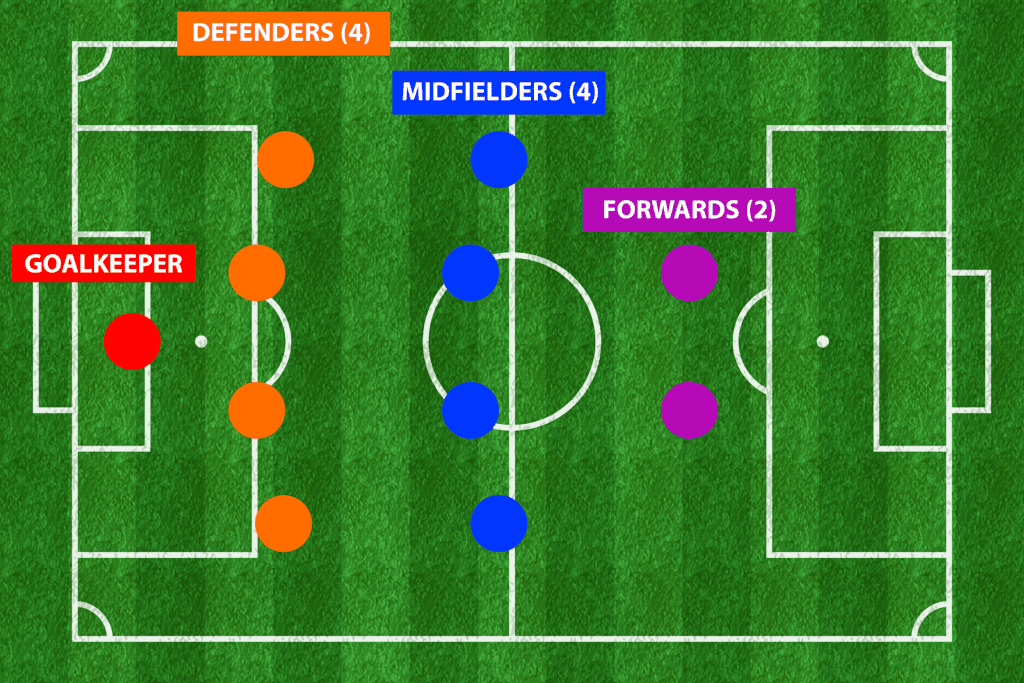
If you’re looking to dominate in the final third, the 4-3-3 formation is one of the most effective soccer formations and strategies for attacking play.
This setup gives you three forwards up top, which puts constant pressure on the opponent’s backline and creates more chances in front of goal. Whether you’re whipping in crosses, making quick 1-2 passes, or taking on defenders 1v1, the 4-3-3 gives you options.
But remember—the best attacking formation isn’t just about numbers, it’s about how you use them. This formation works best when your wingers are fast, confident, and aggressive, and when your midfielders are smart enough to support the attack while covering defensively.
So if your team loves to keep the ball, press high, and go forward with intent—the 4-3-3 might be the perfect fit.
Use it right, and you’ll overwhelm defenses, create more chances, and score more goals.
Defensive Soccer Formations
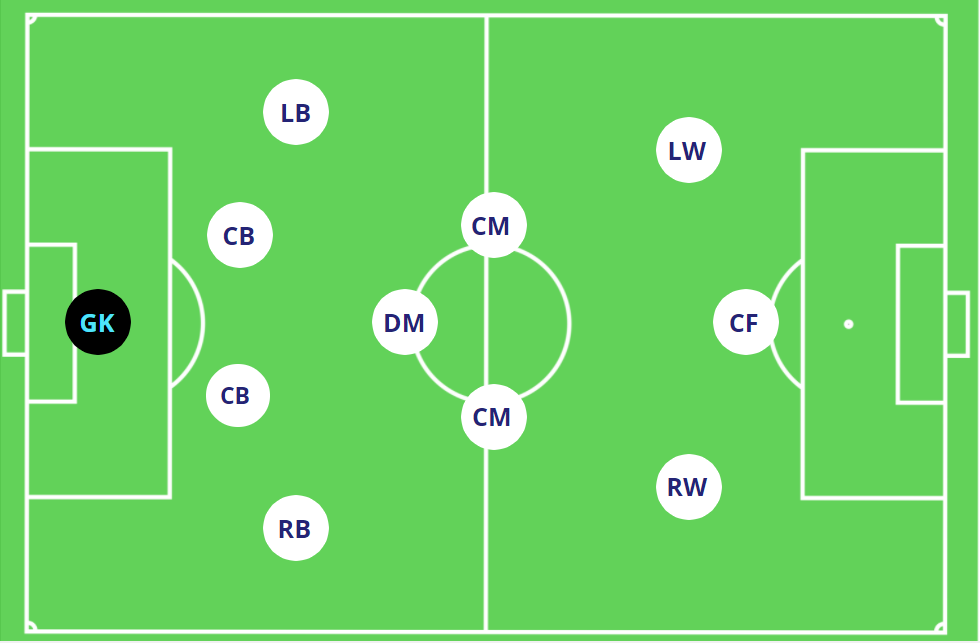
When it comes to solid defensive soccer formations and strategies, the 5-3-2 formation is one of the most trusted setups in the game.
This formation gives you five defenders, which creates a strong back line that’s tough to break down. It’s perfect for teams who want to stay compact, stay organized, and frustrate their opponents.
But here’s what makes the 5-3-2 especially powerful—it’s not just about sitting back. With the right players, you can launch deadly counter-attacks. While your back five keep things locked down, your midfield can win the ball and feed your two strikers quickly.
It’s ideal if your team is playing against stronger opposition or if you want to protect a lead.
If you’re serious about defending as a team and hitting hard on the break, this formation can be a game-changer.
Soccer Formations and Their Advantages
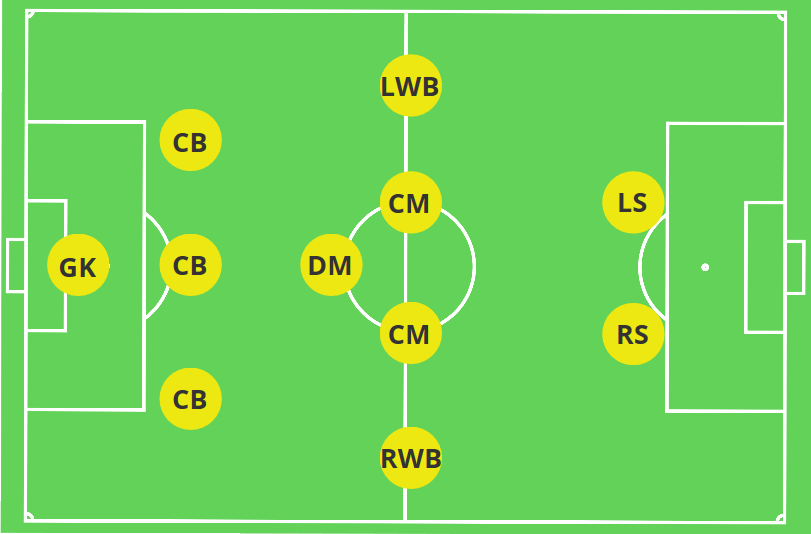
Every soccer formation has its strengths. The key is choosing one that matches your team’s style and your goals on the field. Here’s a breakdown of the most effective formations and what they bring to the table:
⚽ 4-4-2
One of the most balanced setups. It gives you stability in defense and flexibility going forward. Great for quick transitions and maintaining a solid shape across the field.
⚽ 4-3-3
Perfect if your team wants to play aggressive, attacking soccer. With three forwards pressing high, this formation puts constant pressure on the opponent’s defense and creates more chances to score.
⚽ 3-5-2
Want to control the midfield and dominate possession? This formation packs the middle of the pitch, helping your team win the ball, dictate tempo, and build up patiently from the back.
⚽ 5-3-2
Built for teams that prioritize defending first. This setup offers a strong defensive wall, making it hard for opponents to break through, while also giving you the chance to strike fast on the counter.
👉 Choose your formation based on your strengths, your goals, and the way you want to play. The right structure can completely change your team’s performance.
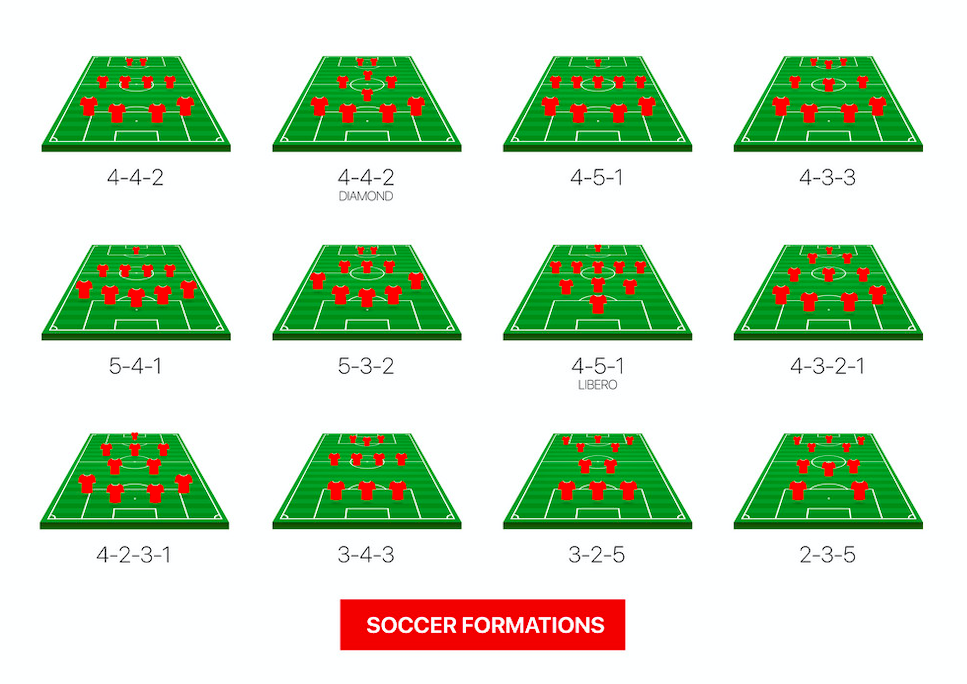
Soccer Formations Strengths and Weaknesses
Every formation comes with trade-offs. What works in one match might not work in another—so it’s important to understand not just the strengths, but the vulnerabilities that opponents will try to exploit.
Let’s break it down so you can make smarter decisions on the field.
⚽ 4-4-2 Formation
✅ Strengths:
- Balanced setup between attack and defense
- Great for quick transitions and counter-attacks
- Easy to organize, making it a strong base for beginners
❌ Weaknesses:
- Can leave you outnumbered in midfield, especially against 3-man midfields
- Lacks width, which can limit creative play out wide
- Struggles to dominate possession in tight games
⚽ 4-3-3 Formation
✅ Strengths:
- Excellent for attacking play and pressing high
- Creates constant scoring opportunities with three forwards
- Forces mistakes by pressuring the opponent’s back line
❌ Weaknesses:
- Can be exposed on the counter if midfielders push too high
- Demands high fitness and discipline, especially from midfield
- Vulnerable to compact, narrow teams that stay organized defensively
⚽ 3-5-2 Formation
✅ Strengths:
- Dominates the midfield with numbers and control
- Wing-backs provide width and attacking support
- Three central defenders offer a solid back line
❌ Weaknesses:
- Open to quick counters down the flanks
- Requires extremely fit wing-backs and midfielders to cover ground
- Can struggle if opponents flood the midfield and win second balls
⚽ 5-3-2 Formation
✅ Strengths:
- Compact and defensive, ideal for teams who want to frustrate opponents
- Creates chances with fast counter-attacks
- Hard to break down when players stay disciplined
❌ Weaknesses:
- Limited attacking presence, especially in open play
- Can invite pressure by sitting too deep
- Needs a lot of communication and defensive organization
👉 Key takeaway: There’s no “perfect” formation. The best one depends on your team’s strengths, your game plan, and how disciplined your players are. The more you understand the pros and cons, the more confidently you can adapt and win.

Soccer Strategies and Tactics
Formations are just the start. What really separates great teams is how they use their formation—and that comes down to strategy. Here are three powerful tactics you need to understand and start applying in your game:
🔁 High Press
Put pressure on the opponent high up the field. Force turnovers before they get a chance to build an attack. This is all about intensity, teamwork, and timing.
⚡ Counter-Attacking
Win the ball—and go fast. This strategy catches opponents off-guard by transitioning from defense to attack in a flash. It’s deadly when done right.
🎯 Possession-Based Play
Keep the ball. Stay patient. Wear the other team down. This style is focused on control, movement, and waiting for the perfect moment to break through.
Soccer Formations Explained Easily
Understanding formations is crucial, but knowing the specific roles and responsibilities of each player on the field is what truly takes your game to the next level.
When you know your position—and what’s expected of you—you make smarter decisions, help your team more, and elevate your overall performance.
In this video, I break down every soccer position—from the goalkeeper all the way up to the forwards—and explain exactly what each role demands.
So grab your ball, get comfortable, and let’s dive into the game like a pro!
Mastering soccer formations and strategies is key to unlocking your potential as a player. Whether you’re just starting out or already playing at a high level, knowing when and how to use different formations and tactics will give you a serious advantage on the field.
Always think about the strengths and weaknesses of each formation. Then, tailor your approach to fit your team’s best qualities—and exploit the weaknesses of your opponents. This mindset is what separates good players from great ones.
Get ready to take control and make smarter, more confident decisions every time you step on the pitch.
Common Questions
Here are some common questions about soccer formations and strategies:
What is the most successful soccer formation?
The most successful soccer formation often depends on your team’s style, the players you have, and who you’re up against. That said, the 4-3-3 formation stands out as one of the most effective and widely used.
This setup gives you a strong defensive backbone with four defenders, while the three midfielders control the game, linking defense and attack seamlessly. Up front, three forwards stretch the opponent’s defense and create plenty of scoring chances.
Look at teams like Barcelona and Bayern Munich under Pep Guardiola—they mastered the 4-3-3 by combining tight possession with quick, fluid attacks. It’s a formation that balances control and creativity, and it’s proven to win big games. If you want to build a winning team, mastering the 4-3-3 is a powerful place to start.
What is the most aggressive formation in soccer?
The 3-4-3 is one of the most aggressive soccer formations you’ll see on the field. With three forwards and an attacking midfield, it’s designed to overwhelm the opponent’s defense and keep constant pressure on their backline.
This setup gives you great width in attack, allowing wingers to stretch the game wide and create those crucial one-on-one chances against defenders. It’s all about pushing forward and dominating offensively.
But here’s the catch—it demands top-level organization and discipline. If your team isn’t locked in defensively, you risk getting caught on quick counter-attacks. Mastering this formation means balancing that attacking firepower with solid defensive awareness. When done right, it’s a game-changer.
What is the most balanced soccer formation?
The 4-3-3 formation is often called the most balanced setup in soccer. With four defenders providing a strong defensive foundation, the three midfielders play a crucial role both in shielding the defense and connecting the play forward.
Up front, the three forwards create attacking width and offer flexibility. They can overload the opposition’s box or stretch the defense wide, keeping opponents guessing and opening up space.
This formation’s perfect balance between defense, midfield control, and attacking options makes it a go-to choice for teams looking to dominate every part of the field with consistency and confidence.
What is the most defensive formation in soccer?
The 5-4-1 formation, often called the “park the bus” strategy, is one of the most defensive setups in soccer. It lines up with five defenders—three center-backs and two fullbacks—focused on protecting the goal, while four midfielders work hard to block the opposition’s attacking rhythm.
With just one forward up front, that player often has to hold up the ball and be ready to launch quick counter-attacks. Teams usually rely on this formation when they need to defend a lead or face a much stronger opponent, because it’s designed to absorb pressure and shut down scoring chances.
What is the easiest soccer formation to teach?
The 4-4-2 formation is one of the easiest to teach, especially for beginners and youth players. Its simple setup—four defenders, four midfielders, and two forwards—creates a clear structure that helps players understand their roles without getting lost in complicated positioning.
While it may not be as flashy or dynamic as some other formations, its straightforward design lets coaches focus on teaching essential team principles like maintaining shape, effective passing, and smart movement. At the same time, it remains solid both defensively and offensively, making it a reliable choice for players just starting to learn the game.
What is Pep Guardiola’s formation?
Pep Guardiola is famous for making possession-based football the standard with his 4-3-3 formation, especially during his time at Barcelona, Bayern Munich, and Manchester City.
One of his signature moves is the “false nine”—a forward who drops deep into midfield, pulling defenders out of position and creating overloads to open passing lanes.
His teams focus on short, precise passing, smart movement off the ball, and controlling the rhythm of the game through possession.
Guardiola’s approach is all about flexibility—players switch positions fluidly, adapting to the flow of the match to break down defenses and dominate the midfield battle.
Soccer Players & Parents
Want to become a better soccer player?
Watch this 3-minute video about discovering your true potential
Learn how to improve your skills, mindset, soccer IQ, and fitness—no matter your level. Start playing with confidence, earning respect, and impressing coaches today.
About Coach Dylan
I used to struggle with confidence in soccer, feeling slow, weak, and unmotivated. Coaches overlooked me, and friends made fun of my skills. At one point, I even quit.
But I decided to take control of my development. Through hard work, I transformed my game, earned league titles, awards, a college scholarship, and international caps.
Now, I share my lessons and help others improve through my YouTube channel (1/2 million subscribers), soccer coaching and personal training.

How To Play Soccer Better
Struggling to make progress in soccer or stay organized with your training?
The Soccer Success Planner will help you stay focused, motivated, and increase your chances of achieving your goals in soccer.
Success doesn’t happen accidentally. Use it to set clear goals, create a plan of action, and take control of your future. Learn more about the Soccer Success Planner.
How To Become A Better Soccer Player
Struggling to improve in soccer or unsure how to train effectively? Want to stand out and earn respect from teammates and coaches?
The Online Soccer Academy will get you better results in less time.
Thousands of players have already transformed their game in just 60 days. Learn more about how the online soccer academy.

Related Posts
More related posts from Progressive Soccer Training:
- Top Soccer Tactics to Improve Your Game
- How to Master Defensive Soccer Techniques
- Best Soccer Training Drills for Midfielders
- How to Improve Your Soccer Game Intelligence
- Soccer Set Pieces: Strategies That Win Matches
Additional Resources
- FIFA.com – Understanding Soccer Formations
- UEFA Training Ground – Tactical Analysis
- The Coaches’ Voice – Soccer Strategy Insights
Wishing You Success In Soccer
Coach Dylan
Progressive Soccer
Online Soccer Training via Zoom
Calgary Soccer Training
Coach Dylan
Progressive Soccer
Thank you for reading this article:
Soccer Formations and Strategies: Ultimate Guide to Winning More Games